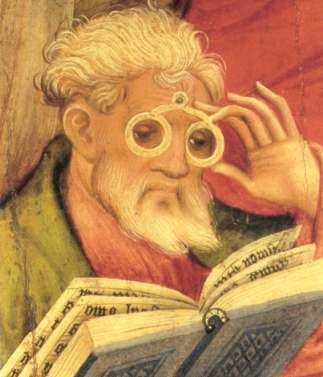
Divine Eyeglasses
Last Saturday, I started to see for the first time. Without realizing it, I had spent the first 45 years of my life blinded to the full extent of human potential.
On Saturday morning, my synagogue held a Bar and Bat Mitzvah celebration. Generally, Jewish boys celebrate their Bar Mitzvahs at age thirteen, and the girls celebrate their Bat Mitzvahs at age twelve. Technically, at Bar and Bat Mitzvah age, children are no longer children, and are mandated with adult responsibilities. However, in a larger sense, the public celebration of a Bar and Bat Mitzvah is a way of recognizing young men and women as full members of the community.
But this particular Bar and Bat Mitzvah was very different. The participants from this past Saturday were all adults, some well into their 50’s. They were celebrating their Bar and Bat Mitzvahs now because they had never had one in their youth. Our six special participants are all intellectually disabled; when they were of Bar Mitzvah age 30-40 years ago, they were pushed to the periphery and their Bar and Bat Mitzvahs were overlooked. Because of their intellectual disabilities, they were deprived of the chance to stand in the spotlight and be affirmed as members of the community.
Throughout history, multiple societies have stigmatized, mistreated and even murdered the disabled. In ancient Sparta, babies deemed “deformed” were tossed into a place called “the apothetae”, a chasm near Mount Taygetus. Martin Luther believed children with severe disabilities were actually “changelings”, demonic beings that took on the form of a human child. He advocated legalizing throwing the “changelings” into the river and drowning them. And the Nazis, even before the start of the Holocaust, initiated “Aktion T4”, a program to kill the physically and mentally disabled. This program may have killed as many as 200,000 disabled people.
Sadly, these negative attitudes continued to have a powerful impact until recently. Due to social pressure, people with intellectually disabilities were often hidden away, their very existence treated as a secret. Up to just a few years ago there was little possibility for an intellectually disabled child to have a large, well attended, public Bar Mitzvah. The developmentally disabled were often viewed as blemished and flawed, the sum total of their disabilities. The general public simply couldn’t see the person beyond the disability.
It is that view of the intellectually disabled that changed on Saturday morning. Human vision is clouded by the superficial and the subjective. There is a powerful passage in the Book of Samuel that says that “man sees only with his eyes, but God sees into the heart.”. Humanity’s perspective is shallow, limited by what our eyes can see. But this past Saturday, our congregants were fitted with a pair of divine eyeglasses. During the ceremony we saw exactly what God sees, the beauty of the human soul.
We saw into the hearts of the participants, who were waiting for this Bar- Bat Mitzvah ceremony their entire lives. In front of us were six people whose hearts were full of joy and pride. In their shy demeanor and gentle words, we could see the long road they had taken in search of dignity, and all the struggles they had faced. And most of all, their faces radiated love; you could immediately feel the sense of connection between the participants and everyone in the room.
There was another group in the synagogue whose lives were transformed by this celebration, perhaps even more than the participants themselves: the participant’s families. These families had experienced the sting of exclusion, as their brothers and sisters were isolated without any friends in the neighborhood, and their sons and daughters bounced from one program to the next. These families were waiting all these years for the day that their sons, daughters, brothers and sisters would take their rightful place in the community.
But by far, the people most affected by this celebration were the congregants. The very people whom the community excluded years ago were now taking center stage; and in standing ovation after standing ovation, the community opened their hearts to the six Bar and Bat Mitzvah celebrants. It was truly a family reunion; we, the community, were welcoming back the men and women we had long forgotten.
On Saturday morning, all of us in the congregation were able to see past superficial disabilities, and appreciate the gifts of love, friendship and community. And for a few short moments, we were all wearing divine eyeglasses.
Last Saturday, I started to see for the first time. Without realizing it, I had spent the first 45 years of my life blinded to the full extent of human potential.
On Saturday morning, my synagogue held a Bar and Bat Mitzvah celebration. Generally, Jewish boys celebrate their Bar Mitzvahs at age thirteen, and the girls celebrate their Bat Mitzvahs at age twelve. Technically, at Bar and Bat Mitzvah age, children are no longer children, and are mandated with adult responsibilities. However, in a larger sense, the public celebration of a Bar and Bat Mitzvah is a way of recognizing young men and women as full members of the community.
But this particular Bar and Bat Mitzvah was very different. The participants from this past Saturday were all adults, some well into their 50’s. They were celebrating their Bar and Bat Mitzvahs now because they had never had one in their youth. Our six special participants are all intellectually disabled; when they were of Bar Mitzvah age 30-40 years ago, they were pushed to the periphery and their Bar and Bat Mitzvahs were overlooked. Because of their intellectual disabilities, they were deprived of the chance to stand in the spotlight and be affirmed as members of the community.
Throughout history, multiple societies have stigmatized, mistreated and even murdered the disabled. In ancient Sparta, babies deemed “deformed” were tossed into a place called “the apothetae”, a chasm near Mount Taygetus. Martin Luther believed children with severe disabilities were actually “changelings”, demonic beings that took on the form of a human child. He advocated legalizing throwing the “changelings” into the river and drowning them. And the Nazis, even before the start of the Holocaust, initiated “Aktion T4”, a program to kill the physically and mentally disabled. This program may have killed as many as 200,000 disabled people.
Sadly, these negative attitudes continued to have a powerful impact until recently. Due to social pressure, people with intellectually disabilities were often hidden away, their very existence treated as a secret. Up to just a few years ago there was little possibility for an intellectually disabled child to have a large, well attended, public Bar Mitzvah. The developmentally disabled were often viewed as blemished and flawed, the sum total of their disabilities. The general public simply couldn’t see the person beyond the disability.
It is that view of the intellectually disabled that changed on Saturday morning. Human vision is clouded by the superficial and the subjective. There is a powerful passage in the Book of Samuel that says that “man sees only with his eyes, but God sees into the heart.”. Humanity’s perspective is shallow, limited by what our eyes can see. But this past Saturday, our congregants were fitted with a pair of divine eyeglasses. During the ceremony we saw exactly what God sees, the beauty of the human soul.
We saw into the hearts of the participants, who were waiting for this Bar- Bat Mitzvah ceremony their entire lives. In front of us were six people whose hearts were full of joy and pride. In their shy demeanor and gentle words, we could see the long road they had taken in search of dignity, and all the struggles they had faced. And most of all, their faces radiated love; you could immediately feel the sense of connection between the participants and everyone in the room.
There was another group in the synagogue whose lives were transformed by this celebration, perhaps even more than the participants themselves: the participant’s families. These families had experienced the sting of exclusion, as their brothers and sisters were isolated without any friends in the neighborhood, and their sons and daughters bounced from one program to the next. These families were waiting all these years for the day that their sons, daughters, brothers and sisters would take their rightful place in the community.
But by far, the people most affected by this celebration were the congregants. The very people whom the community excluded years ago were now taking center stage; and in standing ovation after standing ovation, the community opened their hearts to the six Bar and Bat Mitzvah celebrants. It was truly a family reunion; we, the community, were welcoming back the men and women we had long forgotten.
On Saturday morning, all of us in the congregation were able to see past superficial disabilities, and appreciate the gifts of love, friendship and community. And for a few short moments, we were all wearing divine eyeglasses.

